How The Purge(2013) and The First Purge(2018) function as allegories for the Socio-Politcal climate in America
In this critical analysis, I will be exploring the possible interpretations that the films The Purge (2013) and The First Purge function as allegories for the United States socio-political climate and to what extent social and societal issues are reflected. First I will explore how The original film presents the dangers of conformity and willingness to ignore inequality and the lack of solidarity amongst the American people to protect their social standing. I will also look at the presentation of the Right-wing ideologies and to what extent its relation is to the contemporary government of the United States, and how current events have affected the presentation of such a political party in the film.
The Purge franchise takes place in an alternate and hypothetical version of America where a political party called the NFFA (New Founding Fathers of America) have risen to power and once a year, for twelve consecutive hours, crime (including murder) is legal and the citizens of America can choose to take part or hide away until morning. The result is that unemployment is at an all-time low and the crime rate is almost zero. The universe the series is set in has been classed by some critics as “Dystopian”, however, Booker(1994) considers the dystopian strategy to be about “defamiliarization: by focusing their critiques on imaginatively distant settings”, with this definition in mind, it’s arguable that films cannot be considered dystopian. They present contemporary fears and issues in a society that has values very similar to our own in the present day, the very antithesis of “distant”.

As Stephen King (1981 cited by Goldstein, 1998, pg.146) states that “Horror films serve as an extraordinarily accurate barometer of things which trouble the night thoughts of the whole society”. Filmmakers have never shied away from incorporating socio-political messages in film; at the time of the red scare Invasion of the body snatchers (1968), a story of alien invaders who converted humans into hive mind organisms, a film that echoed America’s fear of communism. With this in mind, The Purge can be viewed as an allegory for the political discourse in contemporary American society, with a focus on the right-wing views of the Republican party, the gun control laws and the NRA and the subjugation and treatment of the lower classes, minorities and the disenfranchised.
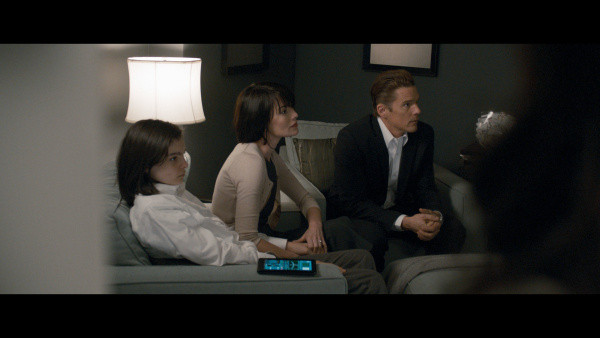
The Purge producers have created a film that’s narrative taps into ‘conflict theory’ suggested by Karl Marx. The film very much re-enforces the idea that the social order of a society is maintained through a means of domination and power. The theory states that those who occupy power, the top 1% in the case of the film, will ensure by any means necessary to retain that power – primarily through the subjugation and suppression of the powerless and most vulnerable of society. The Purge takes place from the perspective of the Sandin family, who live in an affluent suburb located in Los Angeles. James (Ethan Hawke) was recently named the top seller at his company that sells home security systems, to protect people from purge night. It is evident that the family live comfortably and in their large well-furnished home, which is in no small part thanks to purge, as James makes thousands of dollars through selling what feels like nothing short of a necessity for those who are fortunate enough to afford it. However, those who cannot afford such lavish homes and security systems must fend for themselves and run the risk of being purged, it becomes evident that your chances of survival during the purge night are almost wholly dependent what your social class is, and by extension what race you happen to be.

Stuart Hall (1997, pg.1) states that representation means “using language to say something meaningful about, or to represent the world meaningfully”. James Demonaco, the screenwriter and director, uses the script, specifically its characters to convey contemporary societal views and comments on the class system. Attitudes of conservative America are showcased throughout the film, to varying degrees of extremity. During the televised Purge announcement the family’s demeanor is depicted as very casual and unconcerned, for the most part, with daughter Zoey on her phone and James smiling reassuringly. After the announcement the family perform everyday tasks such as James looking at boats on the internet uttering the line “ten years ago we couldn’t afford rent now we can buy a boat”, furthering the idea that the purge has provided financial stability for him.
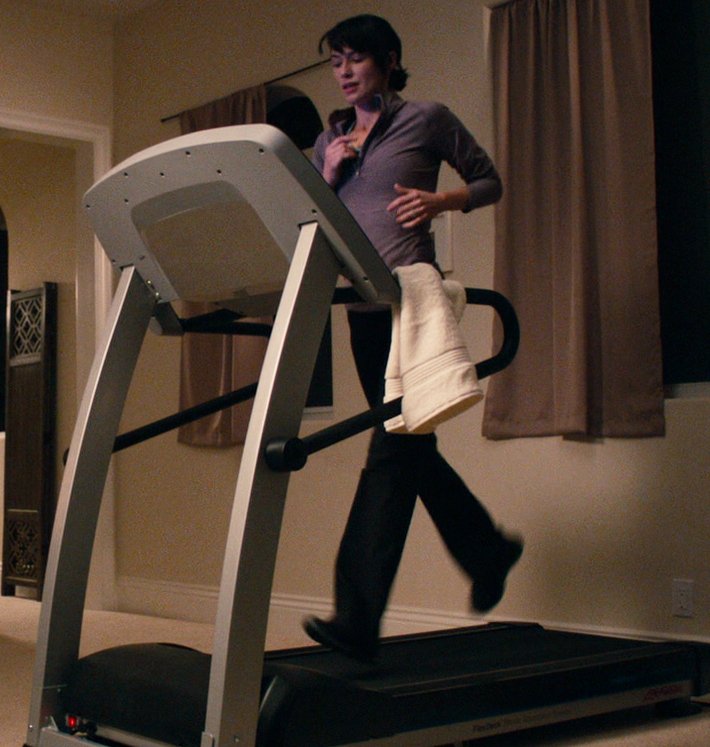
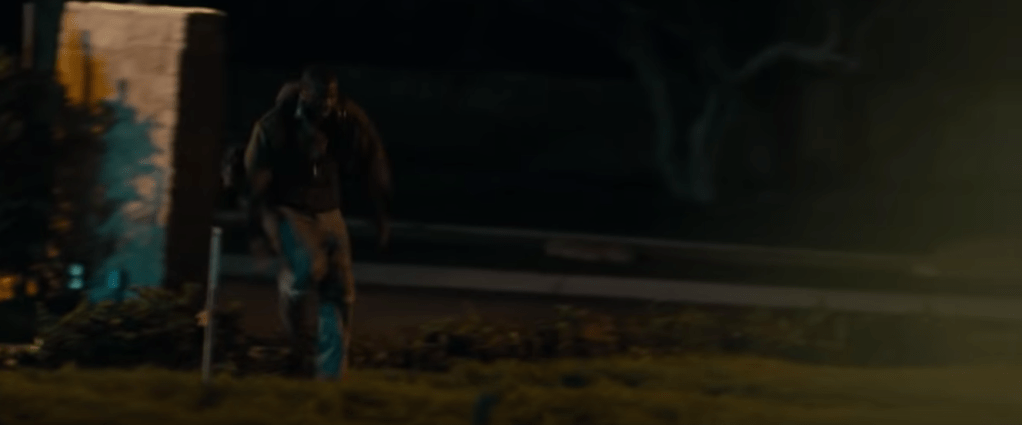
The class divide can be seen as Mary (Lena Headey) is running on a treadmill with the metal shutters of the security system behind her, she is encapsulated in a bubble of security both financially and in the literal sense. This is juxtaposed when the Sandin’s son Charlie (Max Burkholder) looks at surveillance footage of a black man running for his life on the street, vulnerable and alone.
The Sandin’s actions can be examined upon looking at the themes of Shirley Jackson’s The Lottery (1948), a story where villages all take part in a lottery where one participant is stoned to death in a way to maintain the social order. One of the main themes is the danger of blind obedience and how the passivity of the villagers condemns people to death each year, the ritualistic murder has become part of the very fabric of their reality. The person who the town kills has committed no wrong-doing but just happens to have drawn the wrong piece of paper from the lottery, which can be linked to the fact that the minorities in The Purge have little choice in their socio-economic situation but are punished by the regime nevertheless, albeit with direct intent. Shields (2004) “We as readers feel it quite uncomfortable observing such blind obedience to tradition”, as viewers we also view the Sandin’s initial passiveness to the Purge as such, it is difficult to watch. When Charlie asks why his parents don’t take part in the Purge James responds, “We don’t feel like we need to” which he follows up with “tonight allows people to release all the hatred and violence and aggression” which he finishes with “This night saved our country”. This scene is interesting in several respects, such as the high angle Tommy is framed in versus the low angle on James and Mary, Tommy’s views and actions, such as allowing the black veteran into the house to offer him sanctuary, means he occupies the moral high ground – whilst his parents, and their complicity with the Purge, calls their morality into question. During this conversation, the subtle glances that Hawke and Heady give in their performances are indicative of the feelings of unease they harbor, but they keep perpetuating the idea that the purge is good and believing their lie the more they tell their children. Max Weber’s views on Marx’s theory, extend to the fact that he explores how people’s views on inequality depend on the social group they are associated with, whether they perceive those in power to be legitimate or not and as Marx (1859) states:
‘It is not the consciousness of men that determines their being but on the contrary, their social being that determines their consciousness”
With this in mind, the film presents the Sandin’s passivity as a psychological reaction to their socio-economic situation and why they subconsciously choose to ignore and conform to this oppressive regime. In such a case, it can be assessed that the film accurately and realistically represents the middle-class attitudes to the inequality in society.
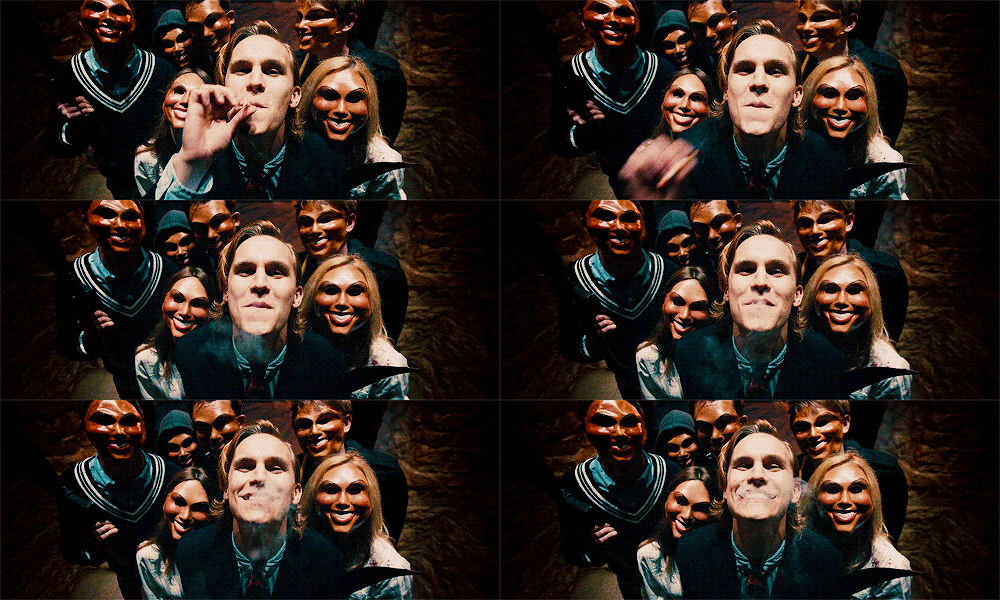
The First Purge (2018), is a prequel to the other 3 films in the franchise. The story takes place during the first-ever purge night and documents how the NFFA implemented it and the behind the scenes goings-on of the governments’ involvement in the practice. This film is a lot more politically charged than the original film and indeed more so than its two sequels, even the one titled Purge: Election Year (2016). This is perhaps Demonaco’s response to the presidency of Donald Trump who had been in power for two years by the time of the film’s release has won the 2016 presidential election over Hilary Clinton. One possible interpretation of the film is that it showcases the systematic racism and oppression of minorities in America. This alternate version of America was plagued by economic turmoil where unemployment rates were high and crime was out of control. The NFFA, a right-wing and religious political party were elected by the people because of their promises to “Make America great again”, a slogan that the current President in our own world swore by and plastered on all of his electoral propaganda. Dr. May Updale’s (Marissa Tomei) social experiment of The Purge takes place on Staten Island, where the government pays $5,000 to anyone that stays there to take part. The NFFA plan to use the purge as a means to eradicate the lower class and minorities. The message of the film’s institutionalized racism is poignant especially in today’s America, as Howard (2007) states “The cinema is one of the places and discussion points of every day speech” and therefore a way of “Talking about society”. We as an audience watch the film and interpret what we see on screen as similar to what we see in our world, the film provides a springboard in which to discuss these issues.

In the two years that Trump had been President, America had seen an increase in the rise of the number of hate crimes and the development of numerous new white supremacist groups. These sorts of groups are depicted in the film when the discourse the NFFA was expecting doesn’t occur, they release mercenaries from the KKK and Nazi groups. “The socio-economic group isn’t behaving the way I expected”, utters Dr. Updale which ties in with Bonilla Silva’s (2010, pg.2) statement “Blacks and Latinos are the targets of racial profiling”, given the violent and aggressive pre-conceived notions she has regarding the people of colour. Whilst these hate groups are undeniably terrible and accurately represented in the film, it’s the NFFA that are the real villains of the narrative. The NFFA seeks to implement an institutionalised habitus of affluent working-class white people (like the Sandins) as the norm but to do that they need to eliminate the ‘undesirables’ in society because they do not fit this ideology.
“The contemporary racial inequality is reproduced through “New Racism” practices that are subtle, institutional and apparently non-racial” (Bonilla-Silva 2010, pg. 3).
With the purge being considered this new “practice”, it is more subtle than the outright racism that groups such as the KKK and white supremacists exhibit, and in the film, it’s very much seen to be that “the main problem is not the folks with the hoods but the folks dressed in suits” (Bonilla-Silva, 2014). The director of this instalment, Gerard McMurrary is black, as are the majority of the cast, which contrasts to the white perspective of the first film, it makes the effect of the message even greater, because it feels very real, and by having a diverse cast it offers representation for audiences of colour (something horror is doing more of in the 21st century). McMurray (2018) stated “As a black man, person of colour, these are things where I’m just experienced, and I thought that was something that I wanted to explore in the film”.
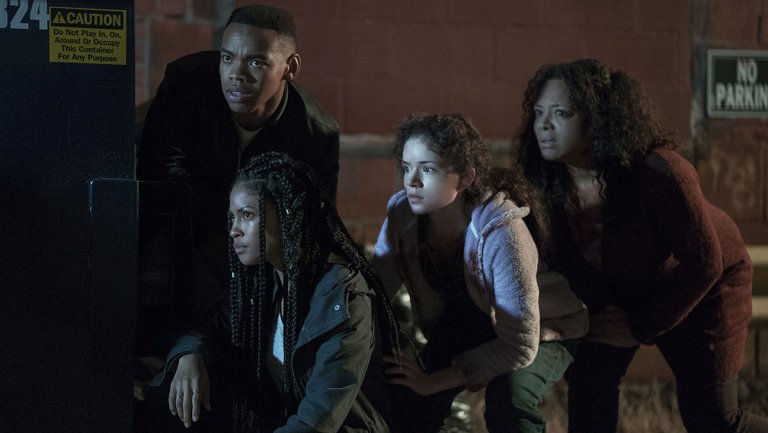
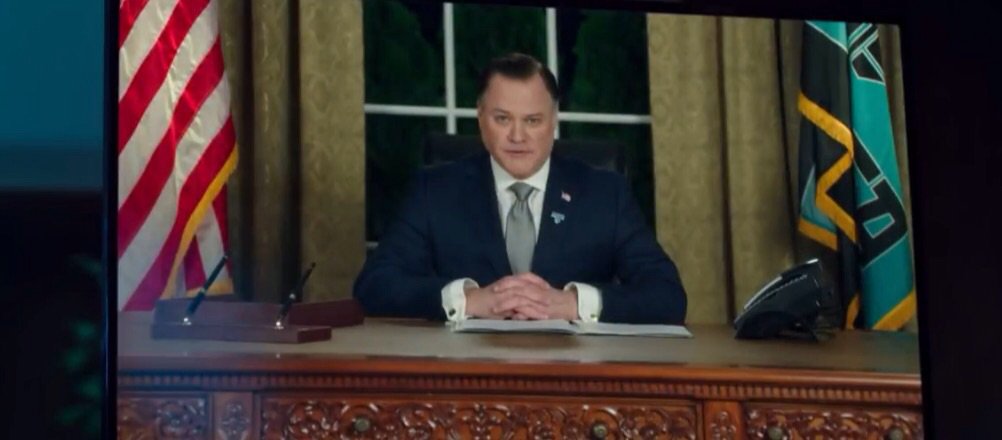
If one was to look at the Presidency of Donald Trump several things fall in line with the politics of this movie. The Immigration policy of 2017 and the supporting of the white supremacist protesters at the Charlottesville rally with the statement “Sad to see the history and culture of our great country being ripped apart” (2017), such views align with the NFFA’s views, it’s no coincidence that the president of the NFFA’s regurgitates this type of rhetoric, “The American dream is dead, we will do whatever it takes to let you dream again”, adapted from Trumps’ “Make America great again”. Both share similar values of restoring America, by suppressing the minorities and making sure that the white affluent middle classes are on top, with the purge as a means of doing that, as Feagin (2006, pg.xi) states:
“This archetypal oppression of black Americans is responsible for a substantial portion of the initial wealth on which the American economy and government were built”.
Demonaco’s presentation of the NFFA represents the backward nature of current America’s right-wing government by criticising not only the views of the republican party but also calling out the conformity of the middle classes to the injustice of the racial inequality in the US. The films present a cautionary tale of political corruption, with The First Purge arguably more effectively doing this by presenting a more overt display of right-wing stereotypes and ideologies.
Reference List
- Becker, H. 2007. Telling about Society. Chicago: University of Chicago Press.
- Bonilla-Silva, E. 2010. Racsism without racists: Colour blind racism and the persistence of racial inequality in the United States. Plymouth: Rowman and Littlefield publishers inc.
- Booker, K. 1994. Dystopian literature: a Theory and Research guide. Westport: Greenbook Press.
- Chappelow, J. 2019. Investopedia [online]. New York. Avaialable from: https://www.investopedia.com/terms/c/conflict-theory.asp [accessed 11th Janurary 2019]
- Feagin, J. 2004. Systematic racism: A theory of oppression. New York:Routledge.
- Goldstein, J. 1998. Why we watch: The attractions of violent entertainment. Oxford: Oxford University Press.
- Hall, S. 1997. Representation : cultural representations and signifying practices. London: Thousand Oaks.
- Marx, K. 1859. A Contribution to the Critique of Political Economy. Moscow: Progress publishers.
- Shields, P. 2004. Arbitrary Condemnation and Sanctioned Violence in Shirley Jackson’s ‘The Lottery'”. Contemporary Justice review [online]. Volume 7. Page 411-419.
- The First Purge, 2018. [Film, DVD]. Directed by Gerard McMurray. USA: Blumhouse Productions.
- The Purge, 2013. [Film, DVD]. Directed by James Demonaco. USA: Blumhouse Productions.
- Zorthian, J. 2017. President Trump Says It’s ‘Sad’ to See U.S. Culture ‘Ripped Apart’ by Removing Confederate Statues. Time [online]. August 17 2017. Available from:https://time.com/4904510/donald-trump-twitter-confederate-statues/
Follow My Blog
Get new content delivered directly to your inbox.
 How The Purge (2013) and The First Purge (2018) function as allegories for American society